What Does an Aesthetic Doctor Do? Treatments, Qualifications, and What to Expect
July 13, 2026
An aesthetic doctor is a fully qualified medical doctor — registered with the General Medical Council — who has undertaken additional specialist training in non-surgical cosmetic medicine. That distinction matters more than most patients realise when they’re choosing where to have treatment. An aesthetic doctor is generally understood to be a GMC-registered medical doctor who has undertaken additional training in aesthetic medicine — though it’s worth knowing that “aesthetic doctor” is not a legally protected title in the UK. Patients should always verify GMC registration directly through the public register at gmc-uk.org rather than relying on the title alone. Understanding this distinction is one of the most important steps you can take before booking any injectable treatment.
This guide covers what I actually do clinically, what my training involved, why it matters for your safety, and what you can expect if you come to see me.
What an Aesthetic Doctor Actually Does
The core of the role is clinical assessment and non-surgical treatment — but the assessment part is as important as the treatment itself, and it’s where the medical background makes the most meaningful difference.
Before any procedure is agreed, I assess the patient’s medical history, current medications, contraindications, anatomical considerations, and whether the treatment they’re asking about is actually the most appropriate solution for their concern. That last point matters more than it might sound. A significant proportion of patients who come in requesting a specific treatment benefit more from a different one — or from a combination — and part of the role is having that honest conversation rather than simply delivering what was requested.
The clinical scope of an aesthetic doctor in practice includes injectable treatments — anti-wrinkle injections, dermal fillers, skin booster injections, PRP — alongside non-injectable procedures like microneedling, and the management of complications arising from treatments performed elsewhere. Each of these requires a different level of anatomical knowledge, technical skill, and clinical judgement, and the depth of medical training behind each one is what differentiates a medically qualified aesthetic doctor from a less qualified practitioner.
Why UK Regulation Matters — and What It Currently Doesn’t Require
This is something I think patients deserve to understand clearly, because the current regulatory situation in UK aesthetics creates real risk.
In England, dermal fillers are not currently restricted to registered healthcare professionals, meaning someone without a medical qualification may legally offer filler treatments after completing private training. The quality and duration of that training varies considerably. This is exactly the gap that has led to a significant increase in aesthetic complications over the last decade — not because the treatments themselves are inherently dangerous, but because they’re being performed by people without the anatomical knowledge or clinical training to perform them safely.
A GMC-registered doctor is accountable to the General Medical Council, operates under medical indemnity insurance, must demonstrate ongoing professional development, and is trained to recognise and manage complications — including serious ones like vascular occlusion during filler treatment. That accountability structure doesn’t exist for unregulated practitioners, regardless of how professional their clinic looks.
When you choose a GMC-registered aesthetic doctor, you’re not just choosing a treatment — you’re choosing a practitioner who is clinically and legally accountable for what they do.
Qualifications to Look For
For patients trying to assess a practitioner’s credentials, here’s what genuinely matters:
GMC registration — for doctors. Verifiable through the GMC’s public register at gmc-uk.org. This is the baseline for any doctor practising in the UK.
Level 7 qualification in aesthetic medicine — the postgraduate-level qualification specifically in non-surgical aesthetics. This covers facial anatomy, pharmacology, treatment protocols, complication management, and clinical decision-making at a level that short training courses don’t approach.
NMC registration — for aesthetic nurses. Nurse practitioners with NMC registration and appropriate aesthetic training are also qualified to perform injectable treatments, though the scope and training requirements differ from a doctor.
Indemnity insurance — any legitimate aesthetic practitioner should carry appropriate medical indemnity. Ask directly. It’s a reasonable question and a serious practitioner will answer it without hesitation.
Hyaluronidase availability — every practitioner performing filler should carry hyaluronidase on-site and know exactly how to use it in an emergency. If a practitioner can’t confirm this, that’s a significant red flag.
A thorough consultation, transparent answers to clinical questions, and willingness to discuss limitations as well as benefits are all markers of a practitioner who prioritises patient safety over treatment volume.
What Treatments an Aesthetic Doctor Performs
Anti-Wrinkle Injections
Botulinum toxin is used to temporarily relax the muscles responsible for expression lines — forehead furrows, frown lines between the brows, crow’s feet, and several other areas depending on the patient’s goals and anatomy. The clinical skill involved is in the assessment of muscle activity and facial anatomy, selecting the right dose and placement for each patient’s specific presentation, and understanding the interaction between different muscle groups so results look natural rather than frozen.
Results typically take four to fourteen days to settle and last three to four months. For patients who want to understand the timeline more specifically, how long anti-wrinkle injections take to work explains each stage in detail.
Dermal Fillers
Hyaluronic acid fillers are used to restore volume, improve facial structure, soften deep lines, and enhance specific features — lips, cheeks, jawline, tear troughs, and nasolabial folds among the most common applications. The clinical complexity here is significant — the face contains multiple vascular structures, and filler placed incorrectly or in the wrong location can cause serious complications including vascular occlusion.
This is precisely why the medical background of the practitioner matters most for filler treatments. Understanding vascular anatomy, recognising early signs of complication, carrying hyaluronidase, and knowing the emergency protocol for vascular occlusion are all non-negotiable competencies that formal medical training provides and a weekend course doesn’t. Dermal filler treatments are therefore planned around your facial anatomy, treatment goals, and individual risk profile to achieve natural-looking results safely.
Skin Booster Injections
Skin boosters deliver concentrated hyaluronic acid into the dermis to improve skin hydration, texture, and quality from within — a different clinical goal to fillers, which add volume and structure. Products like Profhilo go further as bio-remodellers, stimulating the skin’s own collagen and elastin production alongside the hydration effect.
These treatments are particularly effective for patients dealing with persistent dullness, dehydration, or early skin laxity that skincare alone isn’t resolving. Skin booster treatments are personalised according to your skin quality, treatment goals, and the areas being treated to achieve natural, long-lasting improvements in hydration and texture.
Microneedling
Microneedling uses a device with fine, sterile needles to create controlled micro-injuries in the dermis, triggering a wound-healing response that stimulates collagen production. It’s clinically effective for improving skin texture, reducing acne scarring, softening fine lines, and improving overall skin quality. The depth of needle penetration needs to be calibrated appropriately for each patient’s skin and concern — which requires clinical knowledge of skin anatomy and how different skin types respond.
Understanding whether microneedling is worth it for your specific concerns is also covered in detail.
PRP Treatment
Platelet-rich plasma therapy uses components from a patient’s own blood — concentrated through centrifugation — to deliver growth factors to a target area, stimulating tissue repair and regeneration. At this clinic, it’s used for PRP hair treatment in patients with early-stage androgenetic alopecia, and for PRP joint and soft tissue injections in patients with musculoskeletal conditions like osteoarthritis and tendinopathy. The medical background is particularly important here — PRP for joints requires assessment of the specific condition, contraindications, and whether PRP is the most appropriate intervention for the patient’s stage of disease.
Complications Management
One aspect of the role that doesn’t get discussed enough is the management of complications arising from treatments performed elsewhere. As the volume of aesthetic treatment in the UK has grown, so has the number of patients who need complications addressed — filler migration, vascular events, nodules, asymmetry, or results that simply don’t look right.
Managing complications safely requires the same medical knowledge as performing treatments correctly in the first place — plus specific training in reversal procedures, emergency protocols, and clinical assessment of what has gone wrong and why. Complications management is approached without judgement, with the clinical focus on identifying the cause of the problem and achieving the safest possible outcome.
What Happens at Your First Consultation
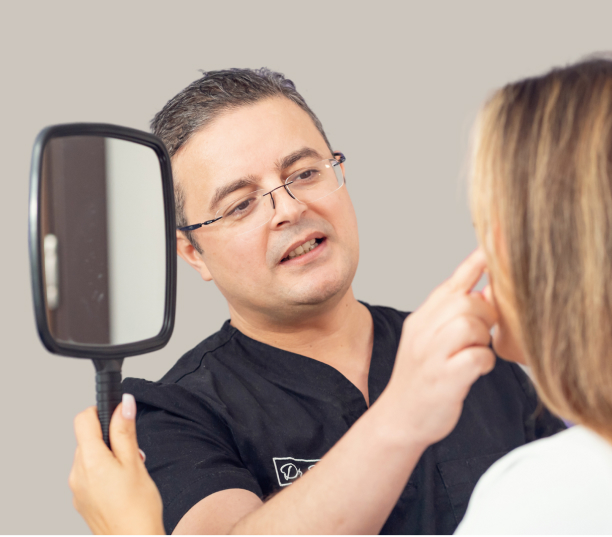
Every patient journey at this clinic starts with a consultation — not a booking for treatment. That order matters. Before any procedure is discussed in detail, I want to understand your medical history, current medications, any previous aesthetic treatments and how you responded to them, and most importantly what you’re hoping to achieve.
A good consultation isn’t a sales conversation. It’s a clinical assessment that ends with an honest recommendation — which sometimes means suggesting a different treatment to the one requested, or recommending against treatment altogether if it’s not appropriate. What to expect at your first cosmetic consultation covers exactly how to prepare and what the appointment will involve.
The Philosophy Behind the Practice
The way I approach aesthetic medicine has shifted over the years toward a more preventative model — addressing concerns early, maintaining skin health proactively, and achieving results that look like a natural version of the patient rather than an edited one. The shift from correction to prevention in aesthetic medicine reflects this — the idea that the best aesthetic outcomes come from consistent, measured treatment over time rather than dramatic intervention.
That means being honest when a patient’s expectations exceed what non-surgical treatment can realistically achieve. It means recommending less rather than more when the clinical picture supports that. And it means treating every patient as an individual rather than applying a standard protocol regardless of anatomy, age, or concern.
Serving Hornchurch and Across Essex
The clinic is based in Hornchurch and sees patients from across the Havering area — Romford, Upminster, Rainham, and the wider Essex and East London catchment. For patients considering their first treatment or looking for a more medically grounded approach after a less-than-satisfying experience elsewhere, the starting point is always the same — an honest consultation with no agenda beyond understanding your concerns and recommending what’s actually appropriate for you.
Conclusion
An aesthetic doctor is a GMC-registered physician with additional postgraduate training in non-surgical cosmetic medicine — not a beauty therapist with an injectable certificate. That distinction has real consequences for patient safety, treatment quality, and what happens if something goes wrong.
What the role involves day-to-day is clinical assessment, personalised treatment planning, and the delivery of injectable and non-injectable procedures with the anatomical knowledge and medical accountability that formal medical training provides. If you’re considering aesthetic treatment — whether it’s your first time or you’ve had treatments elsewhere — choosing a medically qualified practitioner with verifiable credentials is the single most important decision in the process.
Frequently Asked Questions
Q: What is the difference between an aesthetic doctor and a beauty therapist?
A: An aesthetic doctor is a GMC-registered medical doctor with postgraduate training in aesthetic medicine — accountable to the General Medical Council with medical indemnity and the clinical training to manage complications. A beauty therapist operates under beauty industry regulation and may have completed short aesthetic training courses, but does not hold medical qualifications or the same accountability structure. In the UK, there is currently no legal requirement for practitioners to be medically qualified to perform injectable treatments on adults — making it essential for patients to verify credentials before booking.
Q: What qualifications should an aesthetic doctor have?
A: At minimum, GMC registration and a Level 7 qualification in aesthetic medicine. Beyond that, relevant experience in the specific treatments being offered, evidence of ongoing professional development, appropriate medical indemnity, and confirmed availability of emergency equipment including hyaluronidase. All of these are reasonable questions to ask before committing to treatment.
Q: What happens during a cosmetic consultation?
A: A thorough consultation covers your medical history, current medications, any previous aesthetic treatments and how you responded, a clinical assessment of your skin and facial anatomy, and a discussion of your goals and what’s realistically achievable. Recommendations are made based on the individual assessment — not on a standard treatment menu. The consultation ends with a personalised plan, not a booking.
Q: Are aesthetic treatments safe?
A: When performed by a properly qualified medical practitioner following appropriate clinical protocols, the most commonly performed aesthetic treatments have strong safety records. The risk profile changes significantly when treatments are performed by practitioners without adequate medical training or anatomical knowledge — which is why practitioner selection matters as much as treatment choice.
Q: What should I do if I’ve had a bad experience with aesthetic treatment elsewhere?
A: Seek assessment from a medically qualified practitioner as soon as possible — particularly if you’re concerned about filler placement, unusual appearance, or any discomfort. Most complications are manageable when addressed early. Waiting and hoping tends to make correction more complex rather than less. Our complications management service is specifically designed for patients in this situation.
Kind Words
From Our Clients
“Extremely happy with the service and procedure from Dr Salim. He was professional, patient and informative and I am very happy with the result and exceptional follow up service. Highly recommended.”

“Dr Salim is very professional and knowledgable. He listens and is sensitive to your problems. I would highly recommend Dr Salim for treatment. The clinical room in which I have meet with Dr Salim is private and clean. I highly recommend Dr Salim.”
“I had an initial assessment with Dr Salim. He was very professional and explained everything that would happen very clearly which helped to put me at ease. I had the opportunity to ask questions and did not feel pressurised. I would definitely recommend Dr Salim to anyone. A top service!”
“My experience with Dr.Salim was outstanding. Professional place where you can trust and know you are going to be well looked after. Dr. Salim is very skilled and knowledgeable .I have been a returned client as I find his procedures very effective. Couldn’t recommend more.”
“I had my Botox with the lovely Dr Salim who is both professional and reassuring and very informative. I was extremely happy with the results and this is where I will coming for any further treatments. I found the Botox used suited my face extremely well and felt a fresher look was definitely achieved soft but natural . Thank you Dr Salim”
“Amazing experience! I recently had botox treatment, and Dr Salim’s skillful approach and genuine care made me feel at ease from start to finish. He took time to listen to all my concerns, ensuring a personalised and effective treatment. I’m very happy with the results and would highly recommend him.”
Accreditations & Affiliations







Get In Touch
With Us Today