Managing Asymmetry After Dermal Filler: Assessment, Causes, and Correction Options
October 19, 2026
Dermal fillers may help enhance volume, shape, and symmetry of the face, although there may be some unevenness after the procedure. In most cases, such initial unevenness may be linked to swelling and bruises that will fade away with time. There could be other reasons for continued unevenness, and these must be evaluated before correcting immediately.
As a result, this guide covers potential causes, the evaluation procedure, and dermal filler correction options available when asymmetry continues.
Is Asymmetry After Dermal Filler Normal?
There may be some signs of unevenness almost immediately after dermal filler treatment since there will be some difference between the levels of swelling on each side of the face. Bruising, tenderness, and localised swelling are some additional short-term effects of dermal fillers.
It is very important not to form an opinion on the result too early. In case the asymmetry persists or gets worse after the first stage of the recovery process, it is recommended to have an expert examine the place of treatment.
Common Causes of Asymmetry After Dermal Filler
There are several causes of facial asymmetry after fillers, such as:
Cause 1: Inconsistent Injection Volume or Placement
Even for experienced doctors, it is very hard to deliver the same volume and depth on both sides. Even small differences might not be noticeable initially, but will become clear once the swelling goes down.
Cause 2: Filler Migration and Swelling
Fillers move because of gravity, movement of muscles, and pressure within tissues. Since the activity of muscles within the face is not the same on both sides (as you might be chewing food from only one side), migration could happen differently as well.
Cause 3: Enhancement of Pre-Existing Asymmetry
Filler could actually enhance the facial asymmetry that is present but unnoticeable before. The lack of proper baseline analysis means that the same injection strategies on both sides could emphasise the asymmetry.
How Is Post-Filler Asymmetry Assessed?
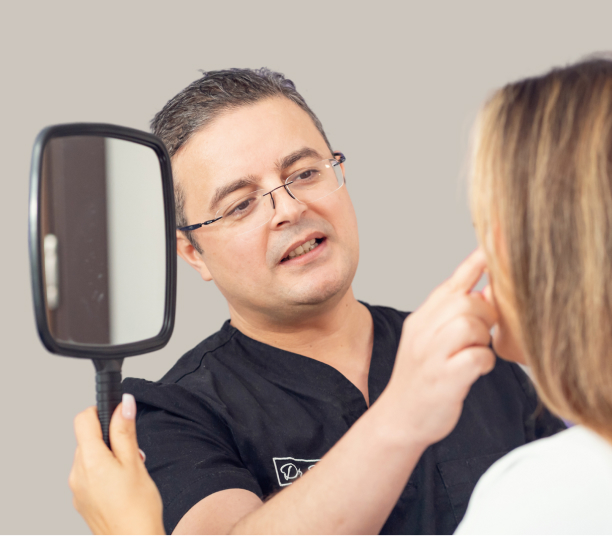
Proper assessment requires taking into account the treated area along with the entire facial structure. A qualified medical professional can:
Waiting Period:
However, clinicians usually wait for two weeks (in complicated cases, from four to eight weeks) before checking the presence of any asymmetry as the initial swelling and bruises can mislead.
Visual Inspection at Rest and in Motion:
Assessments are done with the face in well-lit conditions with the patient in an upright position by observing symmetry when at rest, smiling, talking, and in different head positions.
Photographic Comparison:
Appearance before treatment is compared with current appearance for reference purposes. This allows one to differentiate between new volume differences and existing ones on the face.
Gentle Palpation:
Through touch sensation, the practitioner will be able to tell whether the irregularity results from swelling that is soft, fibrous tissue that is forming, or misplaced filler material.
High-Frequency Ultrasound:
When there is evidence of a structural problem that persists beyond eight weeks, comparative bilateral ultrasound scans map the residual volume, depth, and placement of the fillers.
This assessment is an essential part of aesthetic complications management since failure to identify the causes of the asymmetry and later manage it might lead to unpredictable results.
Correction Options for Filler Asymmetry
The right strategy will depend on the nature of the filling, its location, timing, and cause.
Observation and Healing
If swelling and bruising are the underlying cause of asymmetry, further treatment may even be unnecessary. Your practitioner will probably suggest that you wait for a few days or weeks to decide on whether surgical correction is required or not.
Minor Adjustment
After healing has taken place, a properly qualified practitioner can make the judgment that a little extra filler may help improve balance. This must be done after thorough assessment, not just by adding a bit more filler into an imbalanced area.
Hyaluronidase
When it comes to excess or wrongly placed hyaluronic acid (HA) fillers, one can use hyaluronidase because it breaks down hyaluronic acid (HA). Hyaluronidase is not applicable to all kinds of fillers; thus, it is important to know which kind of filler is used.
Further Treatment
Some conditions require an individually customised treatment plan as opposed to a single correction. The available dermal filler treatment options can vary depending on the issue that will arise, such as swelling, displacement, migration, imbalance or any other issue.
When to Seek Urgent Medical Attention
You need emergency treatment if you have the following:
- Intense or increased pain unrelated to the procedure
- Abnormal skin colour (white, pale, grey, bluish, or mottled skin)
- Skin that is cool to the touch or exhibits delayed capillary refill
- Signs of stroke include trouble speaking, drooping face, or intense headache.
- Vision abnormalities, like blurriness, double vision, and even loss of vision.
- Signs of infection include increased redness, warmth, pus, or fever.
For non-emergency matters, do the following:
- Stay calm and wait for at least two weeks before evaluating your results because the swelling needs to go down.
- Until then, make sure to record the results using pictures under uniform lighting and expressions.
- Contact your injector to conduct a follow-up evaluation and provide your pictures to monitor any changes objectively.
- Adopt their advice regarding massages, observations, or reviews.
- If pain, colour change, or vision problems occur at any time, see a doctor immediately.
Get Expert Filler Correction with Dr Salim Aesthetic Medicine
There can be a number of reasons behind uneven results after dermal filler. These include temporary swelling, unevenness in filler placement, or just because of natural facial structure. Allow some time to heal and get the area checked.
At Dr Salim Aesthetic Medicine, each case is evaluated individually to discover the origin of the asymmetry and the best course of action for correction. A thoughtful, personalised approach can assist in achieving a more balanced and natural-looking outcome while prioritising patient safety.
Frequently Asked Questions
Why does my face look uneven after filler?
Unevenness could be caused by inflammation, facial asymmetry, uneven placement of fillers, or other reasons. It needs to be assessed to determine the reason.
How long does asymmetry last after dermal filler?
It depends on the cause. The swelling and bruising will get better as the healing process takes place. The asymmetry may require some evaluation by a specialist.
Can dermal filler asymmetry be fixed?
Actually, it depends quite a lot on what kind of filler is used and why they were done in the first place. It is possible that they just watch it, or they make a smart decision afterwards, or hyaluronidase may be used if they are the right HA fillers.
Can hyaluronidase dissolve uneven filler?
Hyaluronidase, if used, mainly breaks down hyaluronic acid fillers. However, it does not work on all filler types. Application has to be done by a trained or certified person knowledgeable about the particular situation involved.
How to tell if filler has migrated in the face?
You can detect any migration of the filler through the observation of consistent swelling, lumping, and distortion of your face in places where no filler was injected, several weeks or months after the procedure.
Kind Words
From Our Clients
“Extremely happy with the service and procedure from Dr Salim. He was professional, patient and informative and I am very happy with the result and exceptional follow up service. Highly recommended.”

“Dr Salim is very professional and knowledgable. He listens and is sensitive to your problems. I would highly recommend Dr Salim for treatment. The clinical room in which I have meet with Dr Salim is private and clean. I highly recommend Dr Salim.”
“I had an initial assessment with Dr Salim. He was very professional and explained everything that would happen very clearly which helped to put me at ease. I had the opportunity to ask questions and did not feel pressurised. I would definitely recommend Dr Salim to anyone. A top service!”
“My experience with Dr.Salim was outstanding. Professional place where you can trust and know you are going to be well looked after. Dr. Salim is very skilled and knowledgeable .I have been a returned client as I find his procedures very effective. Couldn’t recommend more.”
Accreditations & Affiliations








Get In Touch
With Us Today